Cotileț stone houses, shell or turnkey
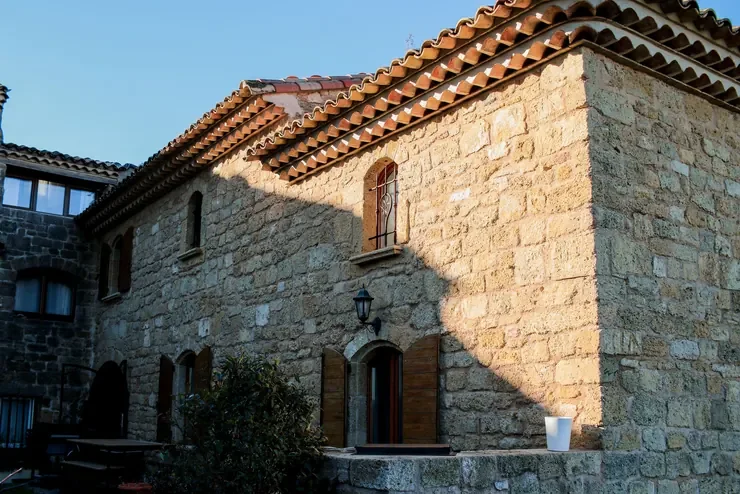
A cotileț house is Moldova's traditional house: walls of limestone laid on mortar, with reinforced concrete ring beams and slabs. We build cotileț stone houses in Chișinău and across Moldova, from the foundation to the keys.
Leave a request
The data is processed in line with the privacy policy.
How we work with cotileț
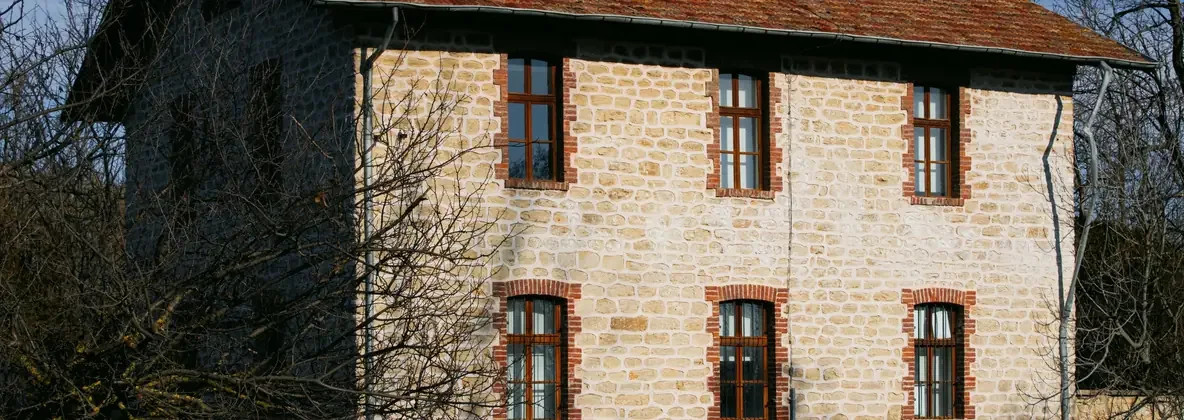
Cotileț is a natural stone: the blocks vary a little, and the mason has to fit them. We check each load when it is unloaded on site.
Chosen blocks
For load-bearing walls we pick blocks of the same quality and set aside any that are broken, too soft or crumbling at the corners.
Masonry on mortar
We lay it on cement mortar with full joints, so the wall works as one. Because the blocks vary slightly in size, we adjust the joint thickness course by course.
Ring beams
Over every storey we pour a ring beam that ties the walls together. The stone is heavy, so the design sizes the ring beam and the foundation for that weight.
Protection from damp
We lay a damp-proof layer over the foundation and plaster the facade, because the porous stone soaks up water. Water in the pores freezes in winter and crumbles the face of the stone, so the wall is never left bare.
The price of a cotileț house
All pricesWe also lay cotileț walls on their own, as labour, priced per m³.
| Work | Unit | Price from |
|---|---|---|
| House shellfoundation, walls, floor slabs, roof, with materials | m² | 5,800 lei |
| White-box housethe shell plus utilities, plaster, screed and windows, with materials | m² | 8,700 lei |
| Turnkey housethe white-box plus finishes, bathroom fittings and an insulated facade, with materials | m² | 14,500 lei |
| Cotileț stone masonrylabour, on mortar | m³ | 500 lei |
A house is priced per m² of built area, materials and labour included. Separate jobs are priced for labour: you buy the materials, or we bring them at the price on the receipt. The exact amount goes into the stage-by-stage estimate once we have seen the design, the plot and the soil.
Why cotileț
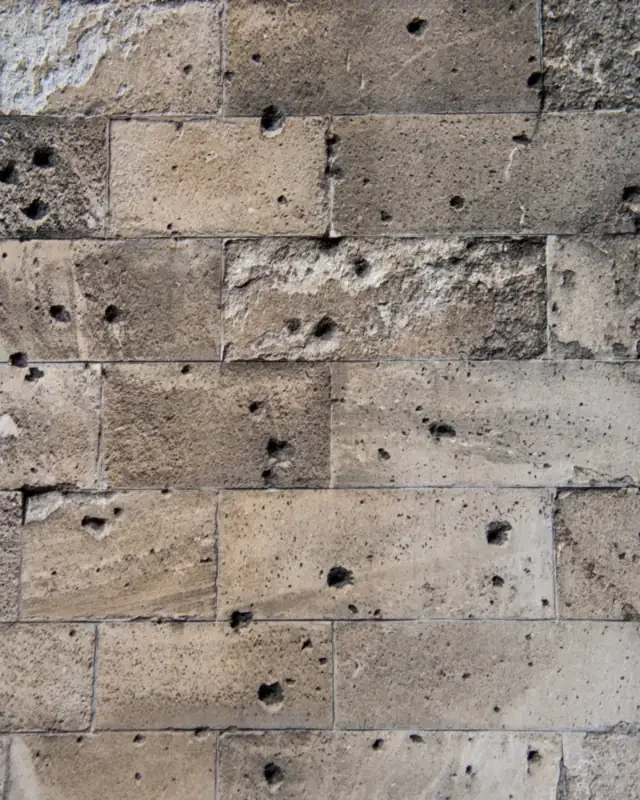
Cotileț is quarried in Moldova, so it is close at hand and inexpensive. Many people also call it Cricova stone, after one of the quarries near Chișinău. A stone wall is thick, breathes and keeps the house cool in summer. Many older houses in Chișinău are built of cotileț.
The stone is heavier and less warm than AAC, so a cotileț house usually needs facade insulation. The weight of the walls also counts in the foundation, which comes out wider than under light walls. If you want lighter, warmer walls, look at AAC block houses too.
How a cotileț house goes up
The order is that of any house shell; only the masonry differs, and it goes a little slower than AAC because each block is fitted by hand.
Foundation
We pour the reinforced concrete foundation and lay the damp-proof layer. On top of it we set the first course of cotileț on mortar, level.
Masonry
We build the cotileț walls on mortar, with lintels over the openings: the corners first, then the rest of the wall along a string line.
Ring beams and slab
We pour the ring beams and the slab, then build the upper floor. We only build on the slab once the concrete has hardened.
Roof
We put on the roof and hand over the shell, or carry on. Plaster and facade come with the white-box and turnkey stages.
Frequently asked questions
What are the pros and cons of a cotileț house?
Pros: a natural, local and inexpensive stone, and walls that breathe and stay cool in summer. Cons: it is heavy, soaks up water and keeps heat worse than AAC, so it needs plaster and usually insulation. The masonry also goes slower, because each block is fitted by hand.
Can a cotileț house have two storeys?
Yes, with ring beams and reinforced concrete slabs. The design sets the wall thickness and the grade of stone. If the design allows, the upper floor or attic can be built in AAC so the upper walls are lighter.
Does cotileț have to be rendered?
Yes. Porous stone left bare soaks up water and breaks down; plaster and an insulated facade protect it. The plaster goes on once the masonry has dried, usually at the white-box stage.
Want a cotileț house?
Tell us the floor area and how many storeys you want, and we send you the estimate for the cotileț house, with the foundation sized for the heavy walls. It is the local stone long used for house construction in Moldova.