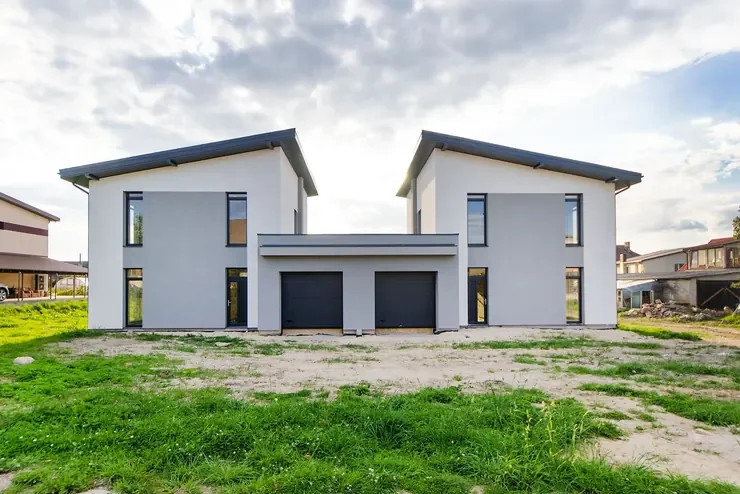
Facade insulation in polystyrene or mineral wool
Facade insulation for new and old houses: we bond polystyrene or mineral wool boards, fix them with plugs, lay the mesh and finish with decorative render. We work turnkey with our materials, or labour only, in Chișinău and across Moldova.
Leave a request
The data is processed in line with the privacy policy.
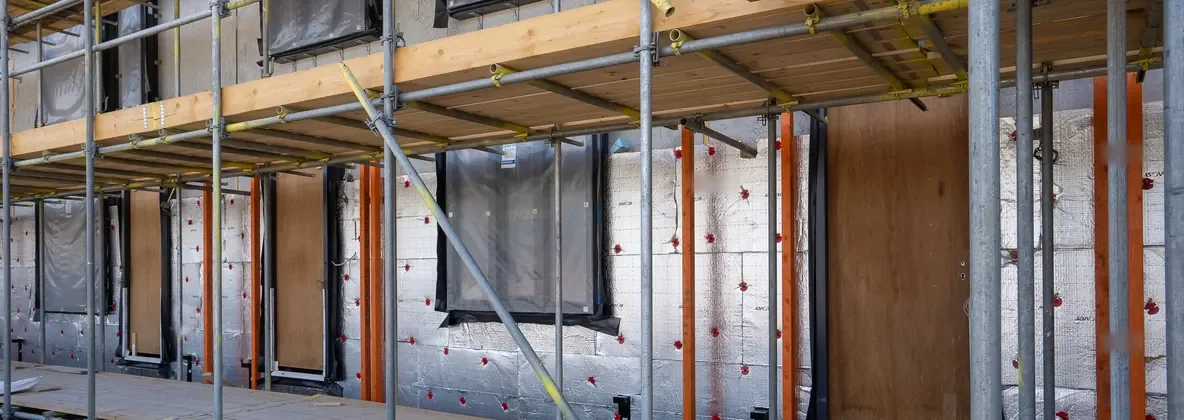
The layers of an insulated facade
Each layer has its own job and goes on once the one beneath it has dried.
Preparing the wall
We clean and prime the wall and fit the base profile. The profile keeps the first row of boards straight and protects their bottom edge.
Insulation boards
Polystyrene or mineral wool boards are staggered, like masonry, with no cross joints, so heat does not escape through the seams.
Mesh and adhesive
Glass-fibre mesh bedded in adhesive holds the render and stops cracks at the corners of windows. Edges and openings get corner beads.
Decorative render
Over the primer goes decorative render in the colour you choose. It closes the insulation against rain and sun.
The price of facade insulation
All pricesA facade is priced per m² of wall. The turnkey price includes materials; the labour price does not.
| Work | Unit | Price from |
|---|---|---|
| Facade insulationlabour: polystyrene, mesh and decorative render | m² | 270 lei |
| Turnkey facade insulationmaterials and labour | m² | 600 lei |
| New metal-tile rooflabour: roof frame and covering | m² | 300 lei |
A house is priced per m² of built area, materials and labour included. Separate jobs are priced for labour: you buy the materials, or we bring them at the price on the receipt. The exact amount goes into the stage-by-stage estimate once we have seen the design, the plot and the soil.
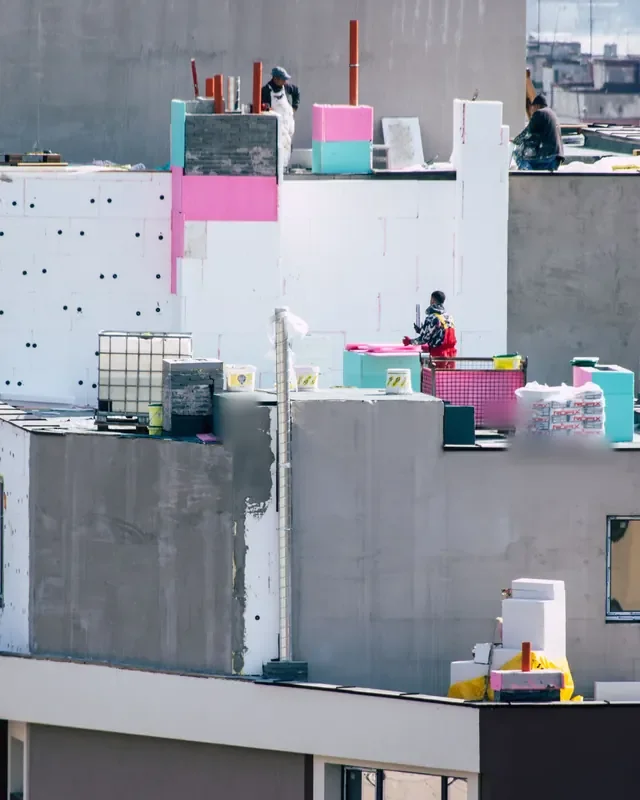
Polystyrene or mineral wool?
Polystyrene is cheaper and easier to fit, so it is what we use most often. Mineral wool does not burn and lets the wall breathe, so we choose it where fire safety matters. Either one keeps the house warm in winter and cooler in the summer heat.
The thickness depends on the wall: a cotileț or brick house needs a thicker layer than an AAC one. At the plinth, where rain splashes and snow lies, we use extruded polystyrene, which does not soak up water. Facade insulation is also the last stage of a turnkey house.
The facade, step by step
The facade of an ordinary house usually takes three to four weeks in good weather.
Scaffolding
We put up the scaffolding and cover the windows, sills and door with sheeting, so adhesive does not stain them.
Insulation
We bond the boards, then fix them with plugs once the adhesive has set. Around windows we cut the boards in one piece, with no joint at the corner of the opening.
Mesh
We bed the mesh in adhesive and smooth the layer. At window corners we add extra strips of mesh, set diagonally.
Render
We apply the primer and the decorative render, then take down the scaffolding. We do not render in strong sun or rain, so the facade is not left patchy.
Frequently asked questions
How thick should the polystyrene be?
Usually 5-10 cm, depending on the wall material and how warm you want the house; we agree the thickness at the estimate. The price difference between a thin and a thick layer comes mostly from the material.
Can a facade be insulated in winter?
Adhesive and render are not applied below +5 °C, so facades are done from spring to autumn. On a house finished in winter, the facade waits until spring.
Do you insulate old houses?
Yes. On old houses we check the wall first: loose plaster comes off and cracks are repaired before the boards go on. On uneven walls we use a thicker bed of adhesive so the facade comes out straight.
Want an insulated facade?
Send us the wall area or a few photos of the house and we tell you the price. The facade completes any turnkey house construction.